Explainer
Why use a braided coiled cable on a mechanical keyboard
16 September 2026 · 4 min read · by the ROQ Gear team
A coiled cable is the one accessory that changes how a keyboard looks more than anything else on the desk, and it is also the one people ask the most sceptical questions about. Does the coil do anything? What is the metal connector in the middle for? Does it slow the keyboard down? Here are the straight answers, then how to choose one.
The three parts and what each one does
- The coil. A coiled section stores about a metre of slack in fifteen centimetres of spring. The cable runs straight from the keyboard to the coil, the coil sits behind the board, and the rest runs to the PC. Nothing drags across the desk, and when you move the keyboard the coil stretches and pulls back instead of the cable snagging.
- The aviator connector. The threaded metal plug in the middle. Aviator connectors came from aircraft and navigation equipment, where a cable that unscrews under load is a problem. On a keyboard cable it does two jobs: it is the detach point, so you unplug the desk half instead of pulling on the keyboard's USB-C port, and the metal ring locks so a tug on the cable does not disconnect anything.
- The braid. A woven sleeve over the wire. Braided cable makers use PET sleeving because it resists abrasion and does not go sticky or crack the way rubber jackets do after a few years of sun and skin oil. It is also why the cable holds a coil at all: a rubber cable relaxes, a braided one keeps the shape it was set in.
Does it make the keyboard faster? No. Slower? Also no
Every custom cable maker says the same thing in their own FAQ: a coiled cable does not change keyboard performance. A keyboard sends a few bytes per keypress over USB 2.0, and any decent USB 2.0 cable carries that with room to spare. Keebs For All puts it plainly: at 1,000Hz and below, the cable does not matter.
The one place to be careful is 8,000Hz wired mode on a magnetic board. Polling that fast is more sensitive to a poor cable, and one manufacturer has argued that cheap coiled cables can hold an 8kHz board back. We have not seen independent test data for that claim. What we can say is that Womier makes this cable for its own 8,000Hz boards and lists it as tested for data transmission stability. If you run 8kHz, check the polling rate in the driver with the cable connected and you have your answer in ten seconds.
The Womier Pro cable, specifically
- USB-A to USB-C, native. No adapter dongle on the PC end.
- 5-pin aviator. Most mass-produced coiled cables use a 4-pin plug. Five pins is the spec the handmade cable makers use, and it is what lets the cable carry both data and power cleanly through the joint.
- 160cm relaxed. Long enough to reach a tower on the floor without stretching the coil, which is the thing that makes coils lose their shape.
- Double sleeved. Braid over an inner jacket. Black or white.
- R199, stocked in Durban. A handmade coiled aviator cable from an overseas maker is $59 to $66 before shipping. Locally, Keychron's coiled cable is R350 and hand-built South African cables run R449 to R499.
What to check before you buy any coiled cable
- Does your keyboard have a recessed port? Some boards sink the USB-C port into the case, and a cable with a fat plug will not seat. Womier's own boards have a recessed port with a side channel for cable routing, and this cable is made for them.
- Where will the coil sit? It should rest on the desk behind the keyboard, not hang off the edge. A coil that dangles is a coil that stretches.
- Do not stretch it to reach. Repeated stretching, heat and twisting are what loosen a coil. Buy the length you need. If a coil does relax, wrap it around a rod, warm it gently with a hair dryer, let it cool, and reverse the coil direction so it pulls tight again.
- Match the plug to your board. USB-C at the keyboard end for every current Womier board. Check the PC end too: USB-A is still the safe choice for a desktop.
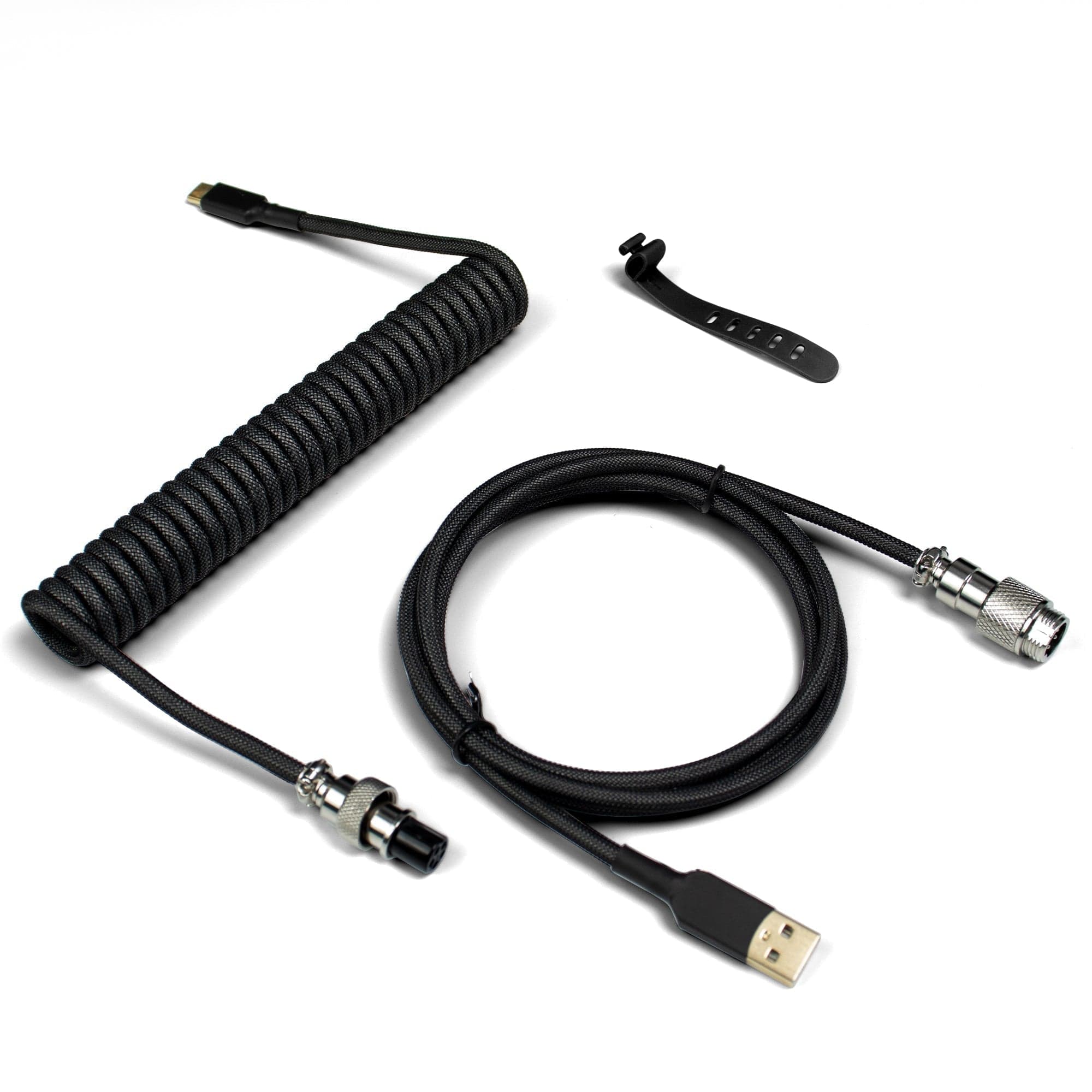
In the store
Womier Pro Braided Coiled Aviator USB-C Cable
R199Notify me
5-pin aviator, USB-A to USB-C, 160cm, black or white.
View product →Verdict
Buy a coiled cable for the desk and the port, not for speed. At R199 for a 5-pin braided aviator cable made by the same company as the keyboards we stock, this one is the easy pick. If you are building around an SK75, it is the first thing most owners add.
Sources
- Womier Pro coiled cable product page (length, connector, colours)
- Womier, upgrade your setup with the Pro braided coiled aviator cable
- Keebstuff, GX12 and GX16 aviator connectors explained
- Glacier PC Gaming, coiled cables and aviator connectors guide
- King Cables FAQ (USB 2.0, latency, stretching)
- Keebs For All, USB cable issues with custom keyboards
- MonsGeek, the 8K keyboard trap (the counter-claim)
- Mambasnake, why coiled cables lose shape
- Deskthority, re-coiling a cable with heat
- Dispatch Cables, sleeving materials overview
- Mechcables pre-made coiled aviator prices
- Tech Guy SA, Keychron coiled aviator cable (R350)
- hlplanet, Womier SK80 Pro review (recessed port, side routing)
In this article
Local warranty, shipped from Durban. Stock status is live.