Explainer
Why use a magnetic switch keyboard? Hall effect, TMR and rapid trigger explained
16 September 2026 · 5 min read · by the ROQ Gear team
A mechanical switch is a spring and two bits of metal. Press far enough and the metal touches, the key registers, and nothing you do with the keycap after that changes anything. A magnetic switch has no contacts at all. A magnet in the stem moves past a sensor, and the keyboard knows exactly how far down the key is at every moment. Every feature people buy these boards for comes from that one difference.
What "knowing how far down" gets you
- Adjustable actuation. You choose the depth at which a key fires, per key. A hair trigger of 0.3mm for movement keys in a shooter, a deep 2.5mm for the keys you keep hitting by accident. On a mechanical switch that depth is fixed at the factory.
- Rapid trigger. The key resets the moment it starts moving up, rather than at a fixed point. Lift a fraction and press again and it fires again. This is what makes counter-strafing and quick direction changes feel instant, and it is the single feature that sells magnetic boards.
- Dynamic keystrokes. One key, up to four actions at different depths. A light press walks, a full press sprints.
- No contact bounce. Nothing physical touches, so there is nothing to bounce and nothing to wear. Womier rates its Void switch at around 100 million presses, the same figure Wooting gives for the Lekker.
Hall effect and TMR are two ways of reading the same magnet
The switch is identical either way: a stem with a magnet in it. The difference is the sensor on the circuit board underneath.
- Hall effect measures the voltage a magnetic field produces across a small semiconductor. It has been in keyboards since the 1970s and in the current gaming boards since Wooting revived it.
- TMR, tunnel magnetoresistance, measures how much the resistance of a very thin layered sensor changes as the magnet moves. The same technology reads the data off hard drive platters. Its output swings far more for the same movement, which is why TMR boards quote 0.01mm resolution against 0.1mm for Hall effect, and it draws far less current, which is why TMR is the sensor that made full-speed wireless magnetic keyboards practical.
Is the difference something you can feel? Mostly no, and the reviewers who cover both say so. One puts it well: a well-tuned Hall-effect board with good firmware will out-feel a sloppy TMR board every time. What TMR changes is what the keyboard can do while unplugged, and how long the battery lasts while it does it.
The rules in games, as of now
Rapid trigger and adjustable actuation are allowed everywhere. The feature that got restricted is SOCD handling, sold as Snap Tap or Snappy Tappy: when you hold left and right together, the board sends only the most recent one. Valve's Counter-Strike 2 update of 19 August 2024 detects hardware-assisted counter-strafing on official servers and kicks for it, and ESL banned it from Pro League the same month. Riot has not issued an equivalent rule for Valorant, so it is a grey area there. On the Womier boards it is a setting called Snap Key that you turn on yourself. Leave it off in Counter-Strike.
The worked example: Womier SK75 TMR
We use the SK75 TMR as the reference because it is the board that shows what TMR is for. It is a 75% aluminium keyboard with Womier's own Void magnetic switches, and it polls at 8,000Hz over the 2.4GHz dongle, not only over the cable. Tech4Gamers confirmed rapid trigger working at the full 8,000Hz wirelessly. Its battery is 8,000mAh, and reviewers report roughly ten days of use with 90% left, and about a month with the lighting off.
| SK75 TMR | |
|---|---|
| Switches | Womier Void magnetic, TMR sensing, POM, factory lubed |
| Actuation range | 0.1 to 3.5mm, 0.01mm precision |
| Rapid trigger | Yes, adjustable, wired and wireless |
| Polling | 8,000Hz wired and on 2.4GHz; Bluetooth is slower |
| Advanced keys | DKS (4 actions), Mod Tap, Toggle, Multi-Trigger, Snap Key (off by default) |
| Case and mount | CNC aluminium, top mount, FR4 plate, about 2kg |
| Keycaps | Cherry profile double-shot PBT |
| Battery | 8,000mAh |
| Hot-swap | Yes, takes magnetic and standard mechanical switches |
| Price | R2,000 from ROQ Gear in Durban; $128 to $159 overseas before shipping and tax |
What seven reviews agree on, and where they don't
- Build. "Fantastic build quality" (Soundphile, 8.2/10), "one of the most comfortable keyboards I've used" (GamingTrend, 85/100), "the typing experience is outstanding" (Wccftech, 9.4/10).
- Wireless 8kHz. Tech4Gamers (9.3/10) measured the full 8,000Hz over the dongle. That is the headline: most magnetic boards drop to 1,000Hz the moment you unplug them.
- Latency. Womier claims 0.125ms. hlplanet measured about 0.6ms wired in its own test. Both numbers are well below anything a person can feel; the point is that the measured figure exists.
- The sound. Two reviewers found the top-mount case firmer and the sound plainer than gasket boards. That is a design choice, not a fault: top mount is stiffer and more consistent under hard presses, which is what a competitive board wants. If you prefer a softer, deeper sound, the standard SK75 is gasket mounted.
- Quirks. The power switch is under the Caps Lock keycap, there is no storage slot for the dongle, and the driver runs on Windows and macOS but not Linux. One reviewer reported double inputs on their unit; the others did not, and Womier moved the stock switch to its own Void design in November 2025.
Who actually needs one
- Shooter players. Rapid trigger is a measurable edge in counter-strafing and peeking. If you play Valorant, Counter-Strike, Apex or Overwatch with any seriousness, this is the category to be in.
- Anyone who wants one keyboard for work and games. Set a deep actuation for typing and a shallow one for a game profile. A mechanical board makes you pick one.
- People who hate cables. TMR is what makes an 8kHz wireless board with a month of battery possible. Hall-effect boards mostly ask you to plug in for full speed.
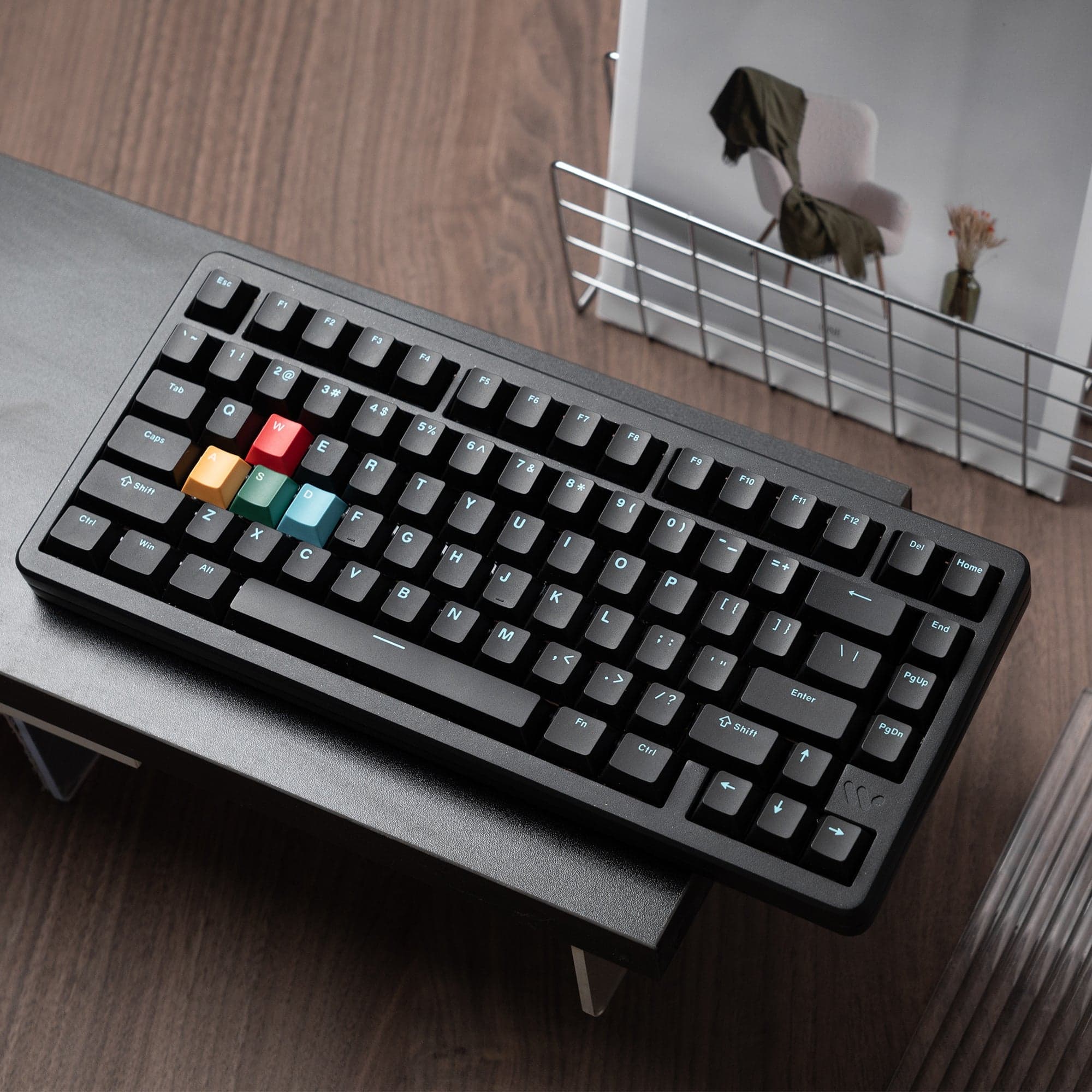
In the store
Womier SK75 TMR Magnetic Switch Aluminium Keyboard
R2 000Notify me
TMR magnetic switches, 8,000Hz wired and wireless, aluminium, 8,000mAh.
View product →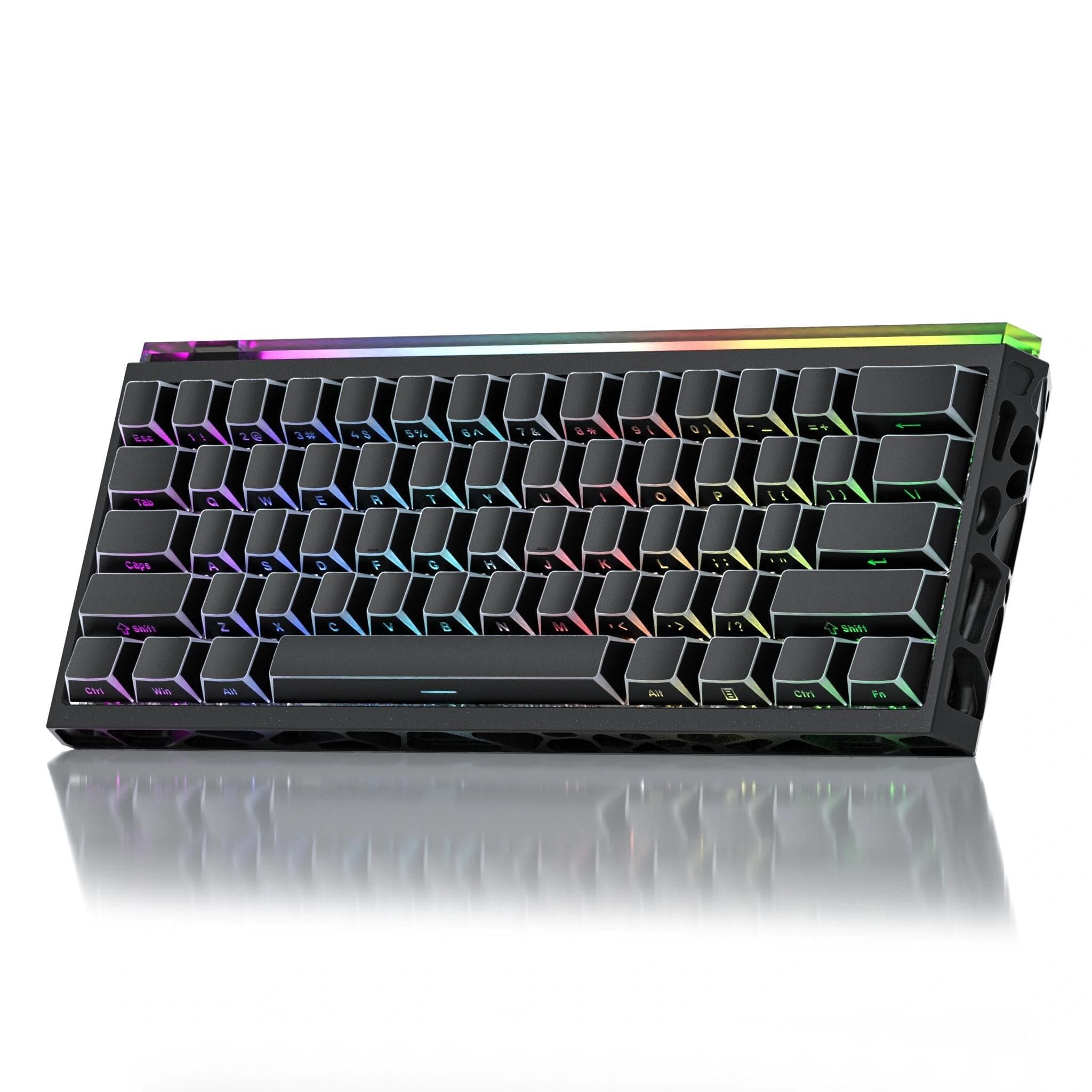
In the store
Womier SK61 HE 60% Magnetic Aluminium Keyboard
R1 550Notify me
The 60% Hall-effect option. Compared with the Wooting 60HE+ in our other article.
View product →Verdict
A magnetic switch keyboard is worth it when rapid trigger will change how a game feels for you, or when you want one board to do two jobs. TMR over Hall effect is worth it when you want that without a cable. The SK75 TMR is the board that delivers both at R2,000, stocked locally, which is less than half of what a Wooting 80HE costs landed in South Africa.
Sources
- Wooting, what are Hall effect keyboard switches
- Wikipedia, tunnel magnetoresistance
- Keychron, TMR vs Hall effect
- How-To Geek, why TMR keyboards are the future (resolution, battery)
- GamingKeyboards.net, TMR vs Hall effect, what actually changes
- Eweadn, rapid trigger, SOCD and DKS explained
- Wooting, Rappy Snappy and Snappy Tappy (CS2 ban)
- Valve, Counter-Strike 2 release notes, 19 August 2024
- Esports Insider, ESL bans Snap Tap
- Womier SK75 TMR product page
- Womier Void magnetic switch (100 million presses)
- Tech4Gamers, Womier SK75 TMR review (8kHz wireless confirmed)
- GamingTrend, Womier SK75 TMR review
- Soundphile Review, Womier SK75 TMR
- Wccftech, Womier SK75 TMR review
- hlplanet, Womier SK75 TMR review (measured latency)
- Gadgetoid, Womier SK75 TMR (sound, software platforms)
- Sypnotix, Womier SK75 TMR review
- EveZone, Wooting 80HE landed cost in South Africa
In this article
Local warranty, shipped from Durban. Stock status is live.